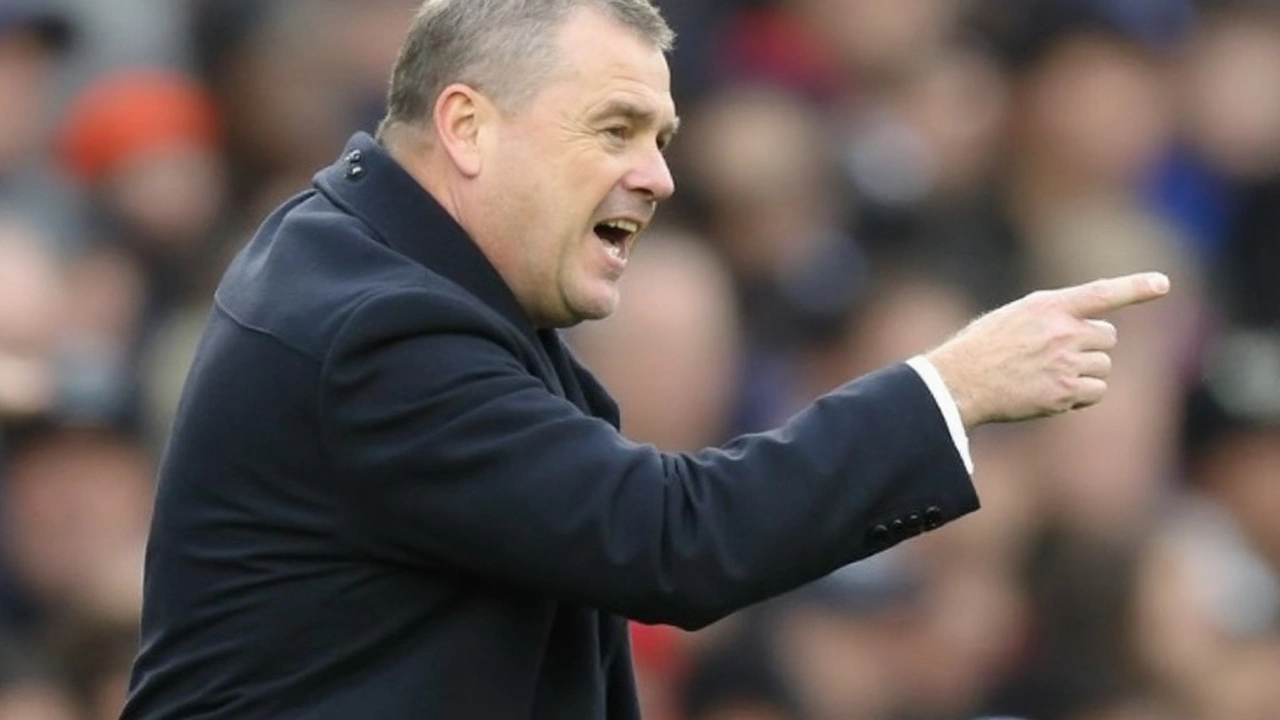
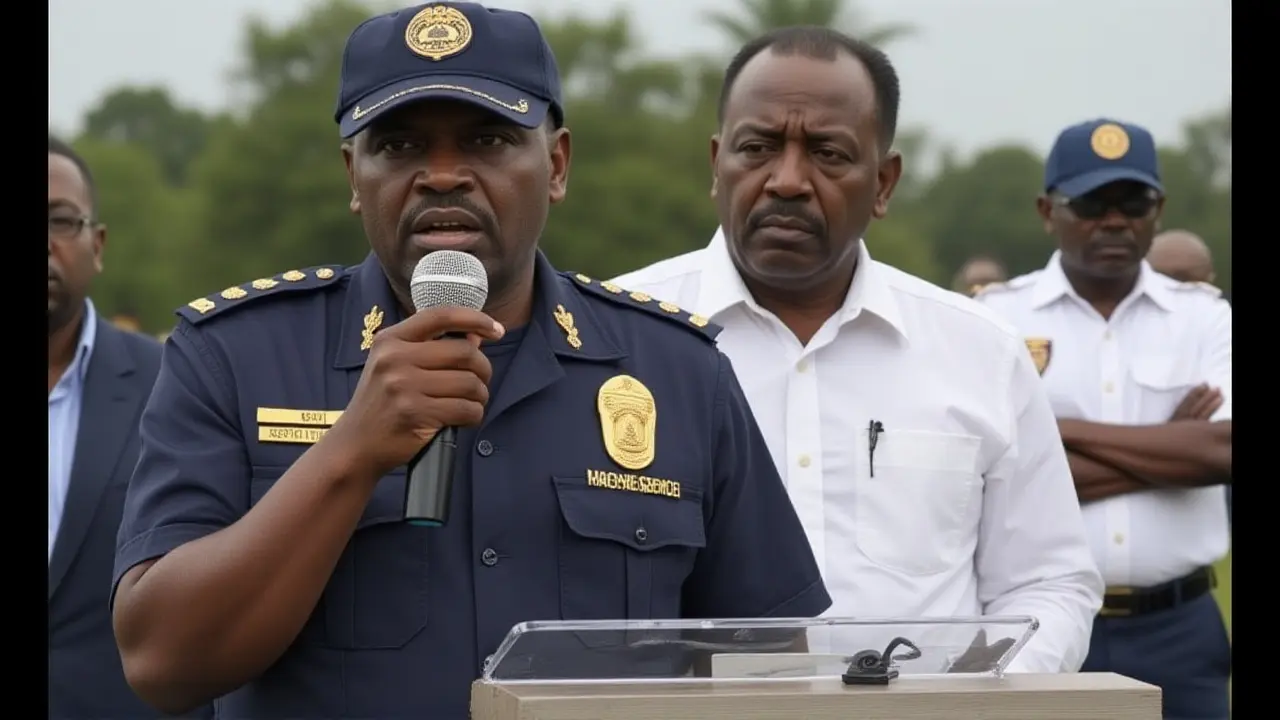
When Julius Mkhwanazi, Deputy Chief of the Executive Management and Policy Development (EMPD), took the stand on 3 December 2025, he didn't just share a story. He pulled back the curtain on a tangled web of police protection, political favors, and cash payments that has gripped South Africa. Testifying before the Madlanga Commission of InquiryPretoria, Mkhwanazi explained exactly how his relationship with controversial businessman Vusimuzi "Cat" Matlala began.
The twist? It wasn’t a chance meeting. According to live coverage by eNCA and SABC Digital News, Mkhwanazi revealed that Mike Van Wyk essentially introduced them. This single admission connects a high-ranking police official to one of the country’s most notorious tenderpreneurs, raising immediate questions about who else was in the room when these deals were cut.
The Origin Story: How They Met
Here’s the thing about corruption investigations: the origin stories are rarely innocent. Mkhwanazi’s testimony detailed the initial contact, but it’s the context that stings. Matlala isn’t just any businessman; he’s described by multiple sources as a "tender tycoon" and a criminal suspect linked to large state contracts. A BBC report noted that Matlala’s company, Medicare24 Tshwane, secured a major tender in 2024, overseen by a female official who later appeared before the commission herself.
Mkhwanazi claimed that Matlala had been enjoying "too much privilege from law enforcement." But wait—it gets more specific. In earlier hearings around 18 September 2025, Mkhwanazi implicated members of parliament, business figures, and fellow police officers in a scheme to protect Matlala’s interests. One shocking detail emerged: someone named Kareem was allegedly asked to persuade a government minister not to cancel a R360-million police contract tied to Matlala. That’s 360 million rand—public money meant for safety, potentially diverted through back-channel influence.
Blue Lights and Cash Payments
Turns out, the relationship wasn’t just about introductions. It was transactional. On 4 December 2025, headlines blared with allegations that "Cat Matlala Made Payments To Mkhwanazi." The questioning was direct: Did you facilitate Matlala’s blue lights? Were you compensated?
In South African policing slang, "blue lights" refers to police escort vehicles with flashing lights—a privilege reserved for dignitaries or high-priority security cases. If Mkhwanazi facilitated this for Matlala, it implies the businessman received VIP treatment from the very agency sworn to serve the public. The implication is clear: protection services were sold, not given.
This aligns with Matlala’s own contradictory testimony. In late November 2025, Matlala told the commission that his "only crime" was refusing to pay kickbacks demanded by certain quarters of the South African Police Service (SAPS). He alleged threats from Mkhwanazi and mentioned cash bribes paid to a figure known only as Cele. It’s a classic prisoner’s dilemma scenario, where both parties accuse each other while trying to minimize their own culpability.
Conflicting Narratives and Geographic Disputes
The details are still unclear on some fronts, particularly regarding personal histories. Mkhwanazi once claimed he and Matlala grew up together. But here’s where the story fractures. A KwaZulu-Natal Hawks boss disputed this claim in January 2026, pointing out that Matlala is from Mamelodi, while Mkhwanazi is from Soshanguve. Two different townships. Different backgrounds. Why fabricate a shared childhood? Perhaps to create a false sense of loyalty or familiarity that could justify preferential treatment.
Further complicating matters, Brown Mogotsi testified that Matlala had informed him of a meeting with the KZN provincial commissioner before Mkhwanazi held a news conference. This suggests a coordinated effort to manage narratives publicly while conducting business privately.
A National Reckoning
What began as a probe into political interference has evolved into something far darker. The FW de Klerk Foundation describes the Madlanga Commission as dismantling the "shadow state" and addressing "State Capture 2.0." This isn’t just about one bad apple; it’s about systemic rot. The commission is examining how criminal networks have embedded themselves within policing structures, using tenders like the R360-million contract as leverage.
The ripple effects are significant. Public trust in the SAPS is already fragile. When citizens see that police escorts can be bought and contracts protected by MPs, faith in the rule of law erodes. As of June 2026, the commission continues to hear evidence from witnesses like "Witness I," who stayed in Matlala’s home, further illustrating the intimacy between law enforcement and alleged cartel members.
What's Next?
The Madlanga Commission is still ongoing. With no end date set, expect more names to drop. The focus will likely shift to higher-ups, including National Police Commissioner General Fannie Masemola, who has been linked to bribery allegations. For now, the public waits for recommendations that might finally clean house—or confirm what many already suspect: that the shadows run deep.
Frequently Asked Questions
Who is Vusimuzi 'Cat' Matlala?
Vusimuzi "Cat" Matlala is a controversial South African businessman and tenderpreneur. He is known for securing large state contracts, particularly through his company Medicare24 Tshwane. He is currently a person of interest in police investigations related to attempted murder and alleged corruption involving law enforcement officials.
What is the Madlanga Commission investigating?
The Madlanga Commission of Inquiry is investigating political interference in policing and broader issues of "criminal capture" in South Africa. It examines how private individuals may have influenced police operations, procurement processes, and decision-making within the South African Police Service (SAPS).
What role did Julius Mkhwanazi play?
Julius Mkhwanazi, a Deputy Chief in EMPD, testified that he facilitated privileges for Matlala, including police escorts ("blue lights"). He admitted to receiving compensation and implicated others in protecting Matlala’s R360-million police contract from cancellation.
Is there evidence of bribery?
Yes, multiple testimonies suggest financial impropriety. Matlala alleged he paid cash bribes to an individual named Cele and faced threats from Mkhwanazi when he refused to maintain kickbacks. Mkhwanazi’s testimony also confirmed payments made to him in exchange for facilitating police services.