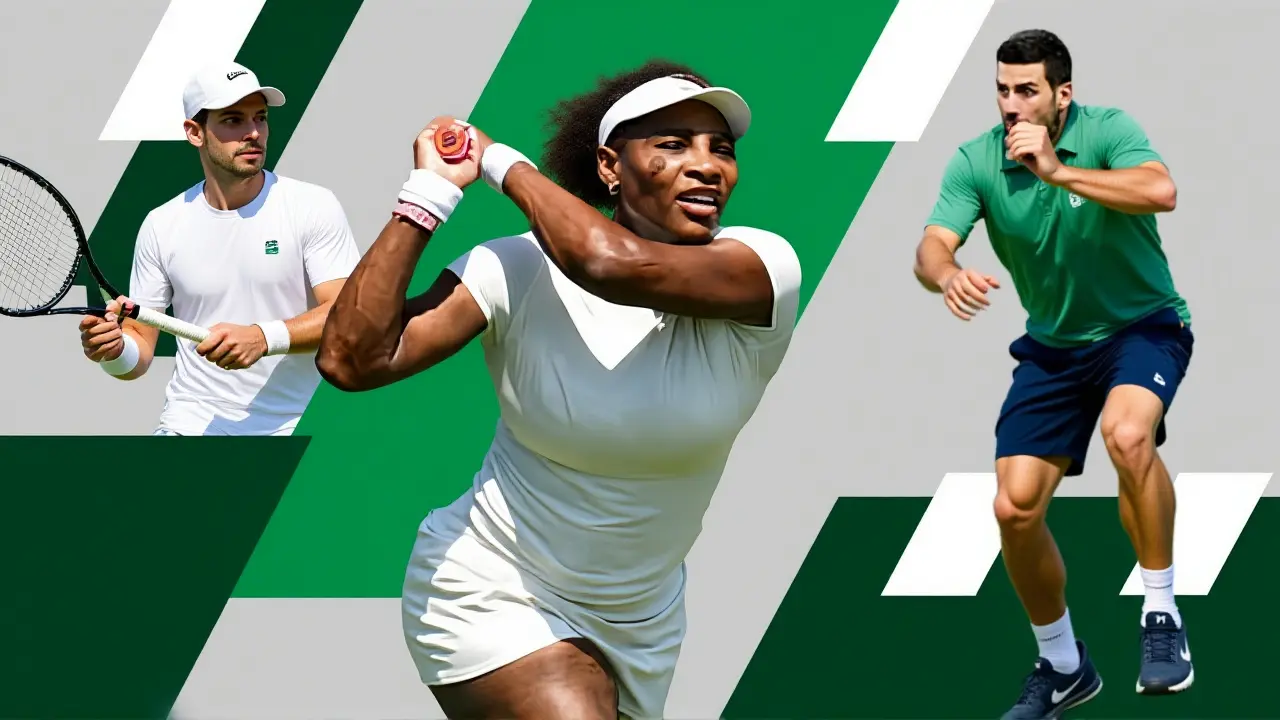
There is a palpable electricity hanging over Southwest London this week. It’s not just the humidity or the record-breaking £64.2 million ($84.7 million) prize pot—the biggest in the tournament’s history. The buzz comes from three distinct storylines colliding at Wimbledon 2026The All England Club: a legendary comeback, a champion fighting for his health, and a world number one battling her own mind.
The narrative anchor? Serena Williams, former World No. 1 tennis player. At 44 years old, she has accepted the final available wildcard into the women’s singles draw. After nearly four years away from singles competition, the 23-time Grand Slam champion (some outlets cite 24 titles) is back. She faces 20-year-old Australian qualifier Maya Joint on Tuesday, June 30. Later that week, she’ll team up with her sister, Venus, in doubles. But let’s be clear: the spotlight is squarely on her singles debut.
The Comeback Queen Returns
Here’s the thing about Serena’s return: it’s emotionally complex. During a press conference on Sunday, June 28, she admitted, "I never thought I would do this again." That honesty resonates. This isn’t just a celebrity appearance; it’s a serious athletic endeavor. She becomes the second-oldest player ever to compete in the Wimbledon women’s singles main draw, trailing only Martina Navratilova, who was 47 in 2004.
But it hasn’t been easy. Serena described the anti-doping protocols as "grueling," a stark reminder of the bureaucratic hurdles professional athletes face. Yet, her passion remains undimmed. "I expect to be nervous," she said. "That showed the passion... whether it was the first round or the finals." Even rivals like Aryna Sabalenka have praised the move, noting that Serena brings more eyes to the sport. "It’s amazing what she’s doing," Sabalenka said.
Sinner’s Physical Battle
While Serena captures headlines, Jannik Sinner, defending Wimbledon champion, is fighting a different kind of war. The Italian arrived in London with question marks swirling around his physical condition. A taxing clay-court season, an early French Open exit, and lingering wrist and elbow injuries had fans worried.
His first-round match against Miomir Kecmanovic was a testament to his resilience. Lasting three hours and 30 minutes, the five-set thriller ended 4–6, 6–3, 6–7(6), 6–2, 6–3. Sinner survived a terrifying moment where he held a point to lead two sets to one but lost it, allowing Kecmanovic to pounce. By the end, Sinner’s shoe was stained red from a toenail injury sustained during a fall. Despite the pain, he dominated the latter stages, equalling Nicola Pietrangeli’s record with his 94th Grand Slam match win. With Carlos Alcaraz sidelined by a wrist injury, Sinner remains the clear favorite, but his path is fraught with physical uncertainty.
Sabalenka’s Psychological Hurdle
Then there’s Aryna Sabalenka. As the current WTA world number one, she carries immense pressure. Her recent form has been erratic, marked by emotional distress. Just weeks ago, she collapsed in the French Open quarter-finals against Diana Shnaider, losing after leading comfortably. She told reporters, "No thoughts, no emotions. Just want to quit tennis right now."
This slump continued in Berlin, where she suffered consecutive final-set 6–0 defeats—a phenomenon analysts call the "bagel paradox." It suggests a sudden loss of momentum rather than physical decline. However, Sabalenka bounced back strongly at Wimbledon, breezing past Teodora Kostovic 6–2, 6–3 on Centre Court. "Game-wise I feel really good," she said, emphasizing her focus on her own journey rather than rankings. She also backed efforts to improve prize money for lower-ranked players, showing leadership beyond her own performance.
Broader Implications for Tennis
The absence of Carlos Alcaraz reshapes the men’s field significantly. Novak Djokovic, arriving with a "clear opportunity" for a standalone 25th Grand Slam title, benefits from a tilted draw. His physical preparation appears sharper than at Roland Garros, setting up a potential late-stage clash with Sinner if both survive their earlier rounds.
On the women’s side, the depth is formidable. Defending champion Iga Swiatek faces patchy form, while Mirra Andreeva continues her rapid rise. Coco Gauff and Jessica Pegula add further competitiveness. The tournament’s record prize money reflects the sport’s growing commercial power, but debates over player welfare and working conditions persist. Sabalenka’s advocacy highlights these structural issues, ensuring that Wimbledon 2026 is not just about trophies, but about the future of the game.
What to Watch Next
All eyes will be on Serena Williams’ opening match on Tuesday. Can she translate her legend into points on grass? Meanwhile, Sinner must manage his physical recovery as he navigates a deep draw. Sabalenka needs to maintain her mental fortitude to defend her top ranking. And Djokovic lurks in the shadows, ready to capitalize on any slip-ups. The stage is set for drama, resilience, and perhaps, history.
Frequently Asked Questions
When does Serena Williams play her first match?
Serena Williams is scheduled to play her first singles match of the tournament on Tuesday, June 30, 2026. She will face 20-year-old Australian qualifier Maya Joint. This marks her return to singles competition after nearly four years away from the tour.
Why is Jannik Sinner considered the favorite despite recent struggles?
Sinner is the defending champion and enters as the top seed. Although he faced physical challenges, including wrist and elbow injuries and an early French Open exit, his victory over Miomir Kecmanovic demonstrated resilience. Additionally, the absence of rival Carlos Alcaraz due to injury significantly weakens the competitive field, giving Sinner a clearer path to the title.
What is the "bagel paradox" affecting Aryna Sabalenka?
The term refers to Sabalenka suffering consecutive final-set 6–0 defeats, notably in Berlin and Paris. Analysts suggest this indicates a psychological collapse or loss of match momentum rather than a physical inability to compete. It highlights her struggle with maintaining intensity under pressure in decisive moments.
How much prize money is available at Wimbledon 2026?
The total prize pot for Wimbledon 2026 is a record £64.2 million (approximately $84.7 million). This represents a 20% increase from the previous year. Each singles champion is set to earn £3.6 million, marking the largest year-on-year increase in the tournament’s history.
Is Novak Djokovic competing for another Grand Slam title?
Yes, Novak Djokovic is aiming for a standalone 25th Grand Slam title. With Carlos Alcaraz out and Jannik Sinner dealing with physical uncertainties, Djokovic sees a "real opening" in the draw. He stated he feels physically better prepared for Wimbledon than for the French Open, positioning him as a strong contender.