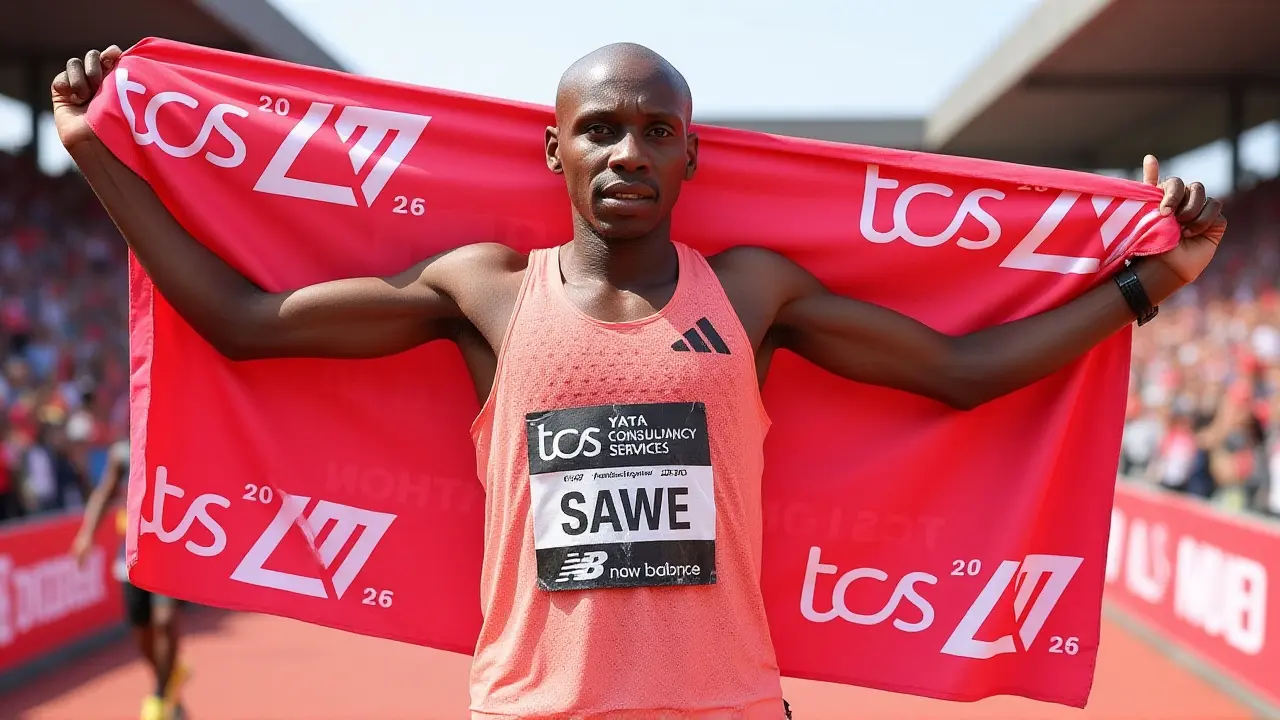
History wasn't just made on Sunday, April 26, 2026; it was obliterated. Sabastian Kimaru Sawe, Kenyan marathon runner became the first human being to officially run a marathon in under two hours, clocking a staggering 1 hour, 59 minutes, and 30 seconds at the 2026 TCS London MarathonLondon. The finish line didn't just mark a victory; it marked the end of an era defined by the elusive "two-hour barrier."
For decades, this specific time threshold was treated as a physiological impossibility for official races. Now, thanks to Sawe’s blistering performance, it’s merely a benchmark. His time shaved a massive 35 seconds off the previous world record of 2:00:35, set by fellow Kenyan Kelvin Kiptum back in 2023. But here’s the kicker: Sawe didn’t just beat the record; he ran faster than Eliud Kipchoge’s legendary unofficial sub-two-hour attempt from 2019.
The Race That Broke the Internet
The conditions were practically tailor-made for speed. Dry, sunny weather greeted the runners on London’s famously flat course. Sawe, defending his title from the previous year, knew exactly what he had to do. He executed a negative split strategy with surgical precision. He covered the first half in 60:29 and then unleashed hell in the second half, finishing it in 59:01.
It wasn’t a solo mission initially. Ethiopia’s Yomif Kejelcha, making his marathon debut, stuck like glue to Sawe’s side. Then there was Uganda’s Jacob Kiplimo, last year’s runner-up, who refused to fade early. The trio stayed locked together until the 30-kilometer mark. That’s when the fitness gap showed. Sawe pulled away, leaving Kejelcha to fight for second place.
Kejelcha finished in 1:59:41—just 11 seconds behind Sawe. Think about that for a second. A debutant breaking the two-hour barrier? And doing it while running second? It defies conventional wisdom about marathon pacing. Kiplimo took third, though reports vary slightly on his final time, hovering around 2:00:28 or 2:02:28. What’s undeniable is that three men finished inside the old world record. In fact, multiple runners broke the previous standard in a single race. That’s not just fast; that’s historic density.
A New Era of Speed
This isn’t Sawe’s first rodeo. The 31-year-old (born March 16, 1995) has built a career on consistency at the elite level. According to his World Athletics profile, he’s won four marathons, all under 2:03:00. He’s ranked #1 in the world, holds a World Road Running championship title, and has twice won major marathons. But nothing prepares you for the pressure of attempting the impossible.
His splits tell the story of a machine in perfect tune. One kilometer every 2:50. One mile every 4:33. The half-marathon split came in at 59:45. These aren’t numbers you see often. They’re numbers that make coaches sit up and take notice. Even British home hero Mahamed Mahamed felt the pace, finishing tenth in a personal best of 2:06:14—the second consecutive year he’s achieved this distinction. Patrick Dever followed closely in eleventh place with 2:06:18.
In the women’s race, Tigst Assefa retained her title in record time, proving the day belonged to records across the board. Obiri placed second in 2:15:53, while Jepkosgei took bronze in 2:15:55. But all eyes remained on Sawe, who had finally done what many thought would never happen under official rules.

Why This Matters Beyond the Track
Let’s be clear: Kipchoge’s 1:59:40 in Vienna was incredible. But it was an exhibition. No prize money, no ranking points, just science and spectacle. Sawe’s run counts. It’s registered as a provisional World Record and African Record by World Athletics. It changes the psychology of the sport. If one man can do it, others will try. The next few years will likely see a flood of attempts to break Sawe’s new standard.
Experts are already calling this a paradigm shift. The margin between "good" and "historic" has shrunk dramatically. For spectators, it means more thrilling finishes. For athletes, it means higher training loads and smarter pacing strategies. The bar has been raised, and it’s sitting comfortably below the two-minute mark.
Frequently Asked Questions
What was Sabastian Sawe's exact time?
Sawe finished the 2026 TCS London Marathon in 1 hour, 59 minutes, and 30 seconds (1:59:30). This time is recognized as a provisional World Record and African Record by World Athletics.
How does this compare to Eliud Kipchoge's record?
Kipchoge ran 1:59:40 in 2019, but it was an unofficial exhibition race. Sawe’s 1:59:30 is an official race result, making him the first person to officially break the two-hour barrier. Sawe was 10 seconds faster than Kipchoge’s unofficial time.
Who finished second in the race?
Ethiopia’s Yomif Kejelcha finished second in 1:59:41. Remarkably, this was his marathon debut, and he also broke the two-hour barrier, becoming only the second person ever to do so officially.
What was the previous world record?
The previous men’s world record was 2:00:35, set by Kenya’s Kelvin Kiptum at the 2023 Chicago Marathon. Sawe improved this record by 35 seconds.
Did other runners break the old world record?
Yes. Three men finished inside Kiptum’s former world record mark. Yomif Kejelcha (1:59:41) and Sabastian Sawe (1:59:30) both broke it. Jacob Kiplimo also reportedly finished under 2:00:35, depending on the source.